News
Home is her happy place
Community Home Support Programs
Home and Community
A home is so much more than bricks and mortar. It’s a feeling. Just ask Helen Johnston.
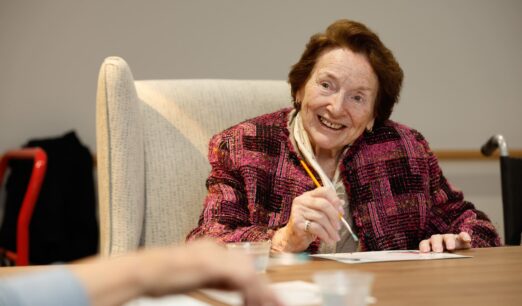
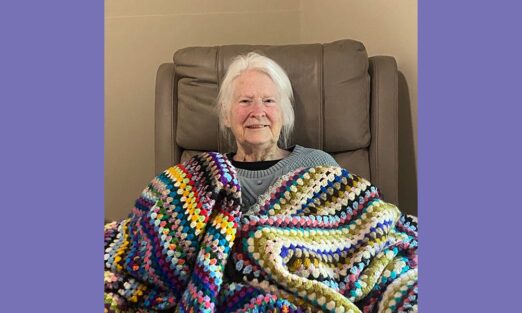
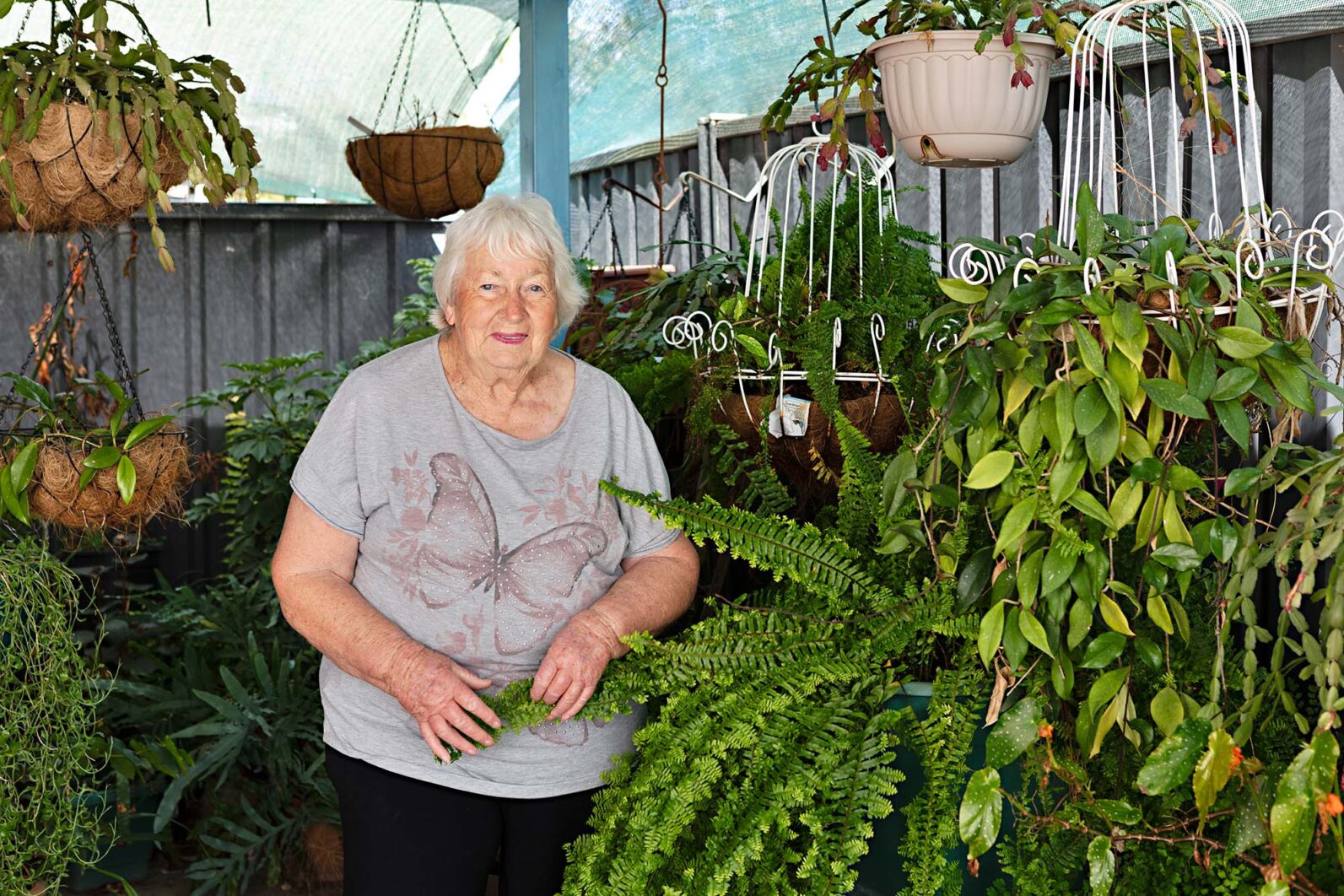
She’s been in her Echuca home for more than 30 years, and it’s a living canvas filled with her art and craft work. There’s a hand-made doona cover on the bed, patchwork art on the walls – she’s even learning how to crochet and is busy making a rug. Helen has also turned the carport into a fernery, and beautiful standard roses frame the driveway.
“I love my home,” Helen says. “It’s where I want to spend the rest of my life.”
Helen is living with Parkinson’s disease but doesn’t let this deter her creativity. She still sews many of her own garments, as well as making items for her children, grandchildren and great-grandchildren. “I can’t sew by hand anymore, but I can certainly still use the sewing machine very well,” Helen explains. “I’m quite particular in what I make though, I like the garments to bring joy.”
April is Parkinson’s Awareness Month – including World Parkinson’s Day on 11 April – and time to put a spotlight on the progressive neurological condition that affects how the body controls movement. The theme this year is #SlowStopCure Parkinsons, focusing on accelerating research to change the future for the 150,000 plus Australians living with the condition.
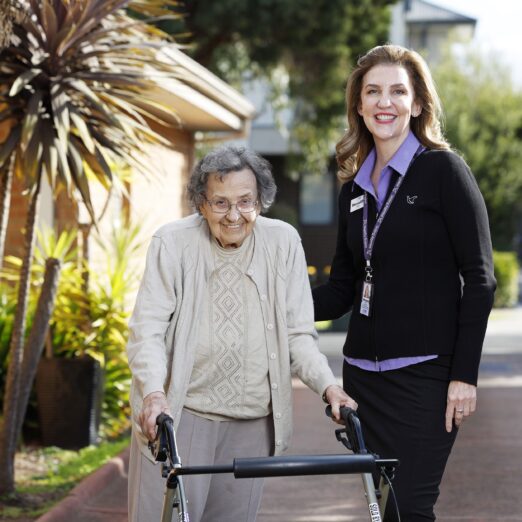
Helen receives Support at Home through Uniting AgeWell. This and her remarkable can-do attitude sustain her when her body cannot. They also help to slow time, to keep her in the home that she loves and amongst her creations, for as long as possible.
Helen was only 14 when she started working at the telephone exchange in country Victoria. She later married and in time brought up five children on her own as a single mum.
Things were tough. But Helen was tougher. She juggled a number of roles to earn money – in the catering business, working with adults with cognitive and physical challenges, doing house-cleaning and working in a shop selling sewing machines and overlockers.
“I’d sew clothes and hang them in the windows to show the clients what the sewing machines could do,” explains Helen. “I also started teaching patchwork quilting classes at night.”
“My family is my pride and joy,” Helen says. “The children are scattered across Australia and they all have great careers and have done so well for themselves.”
Helen’s hands are never idle. She often whips up a cake to take to the staff at Uniting AgeWell’s Echuca office, where she loves to pop in for a cuppa and a chat.
“I’ll make banana bread or a lemon cake,” she says. “It’s my way of showing the team how grateful I am for all that they do for me. I know that I only have to ask for their help, and they’ll be there. It’s a great comfort to me, you know!”