News
Comfort and certainty at the end of life
Residential Care
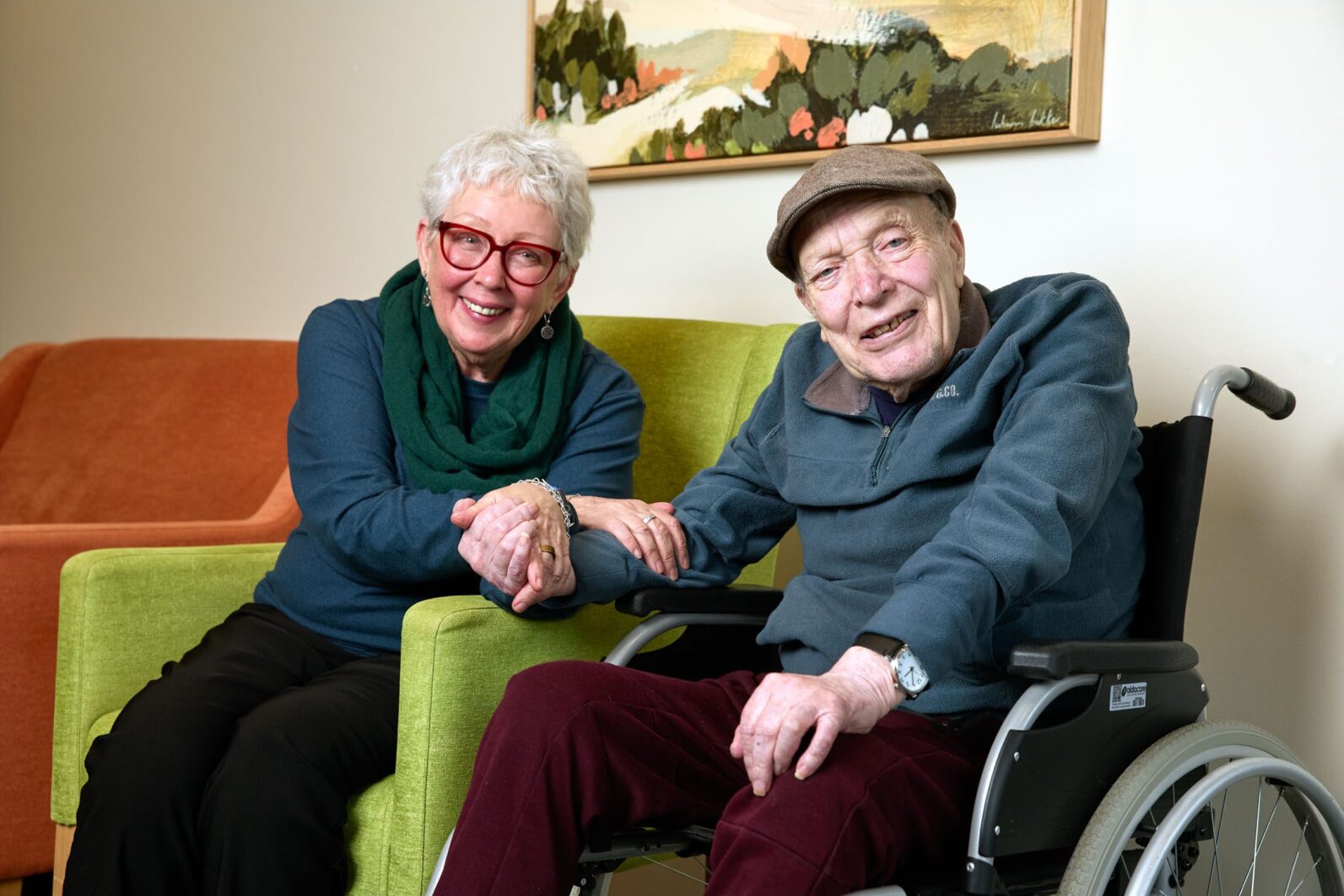
Leonie Parsons is one of life’s organised people. Her former secretarial career means she’s good at ensuring that things run smoothly. So, it stands to reason that she’s established a clear pathway when it comes to palliative care for her husband, Michael.
Michael, who lives with dementia, is a resident at Uniting AgeWell Camberwell Community Condare Court where he has made his home for the past four years and is content and happy. He also comes from a clerical background and used to be just as organised as Leonie.
“Sadly, Michael has not had decision-making capabilities for a long time,” explains Leonie. “Ideally, he would have worked with our family on his Advance Care Directive, but this was not the case. Instead, I worked with our daughter Eve to find a pathway forward. Michael and I have been married for 51 years and I feel confident it reflects what he would want.”
Leonie is also on the Palliative Care Committee at Condare Court to ensure she’s on top of her 88-year-old husband’s care and also in reviewing and monitoring the palliative and end-of-life care of other residents there.
She enjoys attending the quarterly Palliative Care Committee meetings which give her a broad overview of palliative care at the site. “I mostly just listen,” Leonie says – but Residential Services Manager Nancy Carganilla disagrees. “Leonie offers very valuable insight, she contributes a great deal to the meetings,” she adds.
Leonie lives in their Box Hill family home and regularly visits Michael. She accepts the limitations of their conversations. “We’ll chat about the weather, what I have been doing and so on. Thankfully he still recognises me, but there will come a time when he doesn’t.”
The 79-year-old also knows there is no way she could have looked after Michael at home. “I have no nursing experience and I’m physically not strong enough to lift him to take care of his personal needs. At least with him here I know he’s being given top quality care that I would simply be unable to provide.”
It also means Leonie is not exhausted and can spend quality time with him rather than using all her energy to physically care for him. “There’s huge relief in knowing he’s being cared for and is happy.”
Michael certainly is. He grew up in the UK and loves all English foods, especially pork pies and rice pudding. He enjoys attending concerts and Happy Hour but no longer wants to go on bus trip outings, preferring rather to watch TV.
Meanwhile Leonie is in good health and is enjoying studying through the University of the Third Age (U3A). “Learning keeps my mind sharp and keeps me busy,” she says. “I also enjoy going to the theatre with friends. We talk about all sorts of things. I also love spending time with Eve and her wife.”
Having a plan in place as Michael’s dementia progresses provides certainty and comfort. While Leonie is prepared for the inevitable, she knows the staff are on hand to listen to and comfort her.
There is also the opportunity to join in deep discussions on the meaning of life and death at the Soul Café led by the Chaplain Kemeri Lievano. It’s not just for residents. Families are welcome to attend too. “It’s an open, inclusive and safe space to discuss feelings and ask any questions as you or your loved one journeys onto the next season of life,” explains Kemeri. “It’s very meaningful.”
While the extra time between Leonie and Michael is focused on making the most of joyful moments, the need for Leonie to have order and predictability in Michael’s final affairs also comes from a deep heartbreak she and Michael endured as parents.
Amy, their beloved younger daughter, was murdered by her ex-fiancé while living in London in 2019. The shocking and unexpected act has meant Leonie in particular has struggled to regain a sense of control of her world. She has learned to live alongside the searing pain of losing her child – a grief that has not diminished over time.
“Somehow it’s always a relief to talk about Amy,” Leonie says. “She’s always on my mind anyway. Michael never spoke much about her murder afterwards, it was his way of dealing with things. Other friends felt uncomfortable talking about her, but it is what it is. She’s still my little girl … she should be remembered.”
The tragedy of what happened and the resilience of the couple to endure it, isn’t separate to their story now they are approaching the end of Michael’s life. It is testament to the fact that good quality palliative care must consider the whole person and their history, so that they can transition peacefully into their final chapter.
A peace shared by the person and their family.