News
Celebrating Latvian Independence Day!
Residential Care
On Wednesday the 18th of November the Latvian Community in Wantirna South commemorated Latvian Independence Day.
“We are here to honour and be grateful for the people who sacrificed their lives and who suffered so that we, as Latvians, could have freedom and the country could have independence,” said Chaplain Helga Jansons.
The celebration is one that is as emotive as it is visually beautiful.
Lifestyle coordinator Daila Piksons red stripy skirt hung straight by her ankles as she hoisted the Latvian flag into the overcast sky.
Latvia’s National Anthem, ‘Dievs, svētī Latviju’, played through the speakers. Many residents sang along, lyric sheets in hand, while many new it off by heart and sang reverently with their closed eyes.
Latvia first gained its independence in 1918, which only lasted for 22 years. The second world brought German and then the Soviet Union occupation for about 50 years, where they lost the freedom to express their culture, sing their anthem and openly practice their faith.
In 1991, Latvia once again gained independence in a collapsing Soviet Union via a mass protest involving Latvian, Lithuanian and Estonians peacefully joining hands in a human chain that spanned all three Baltic nations.
“It is important to not take freedom for granted in Latvia, especially now with what’s happening in Ukraine,” said Helga.
Special guest Jänis Dëlins, the Honorary Consul of Latvia in Melbourne, has been attending the ceremony at the complex for over a decade and a half. He shared an update on the nation’s recent achievements; the recent successes of Latvian business and its flourishing culture.
To close the ceremony, 100 year-old resident Betija recited a poem in her native tongue.
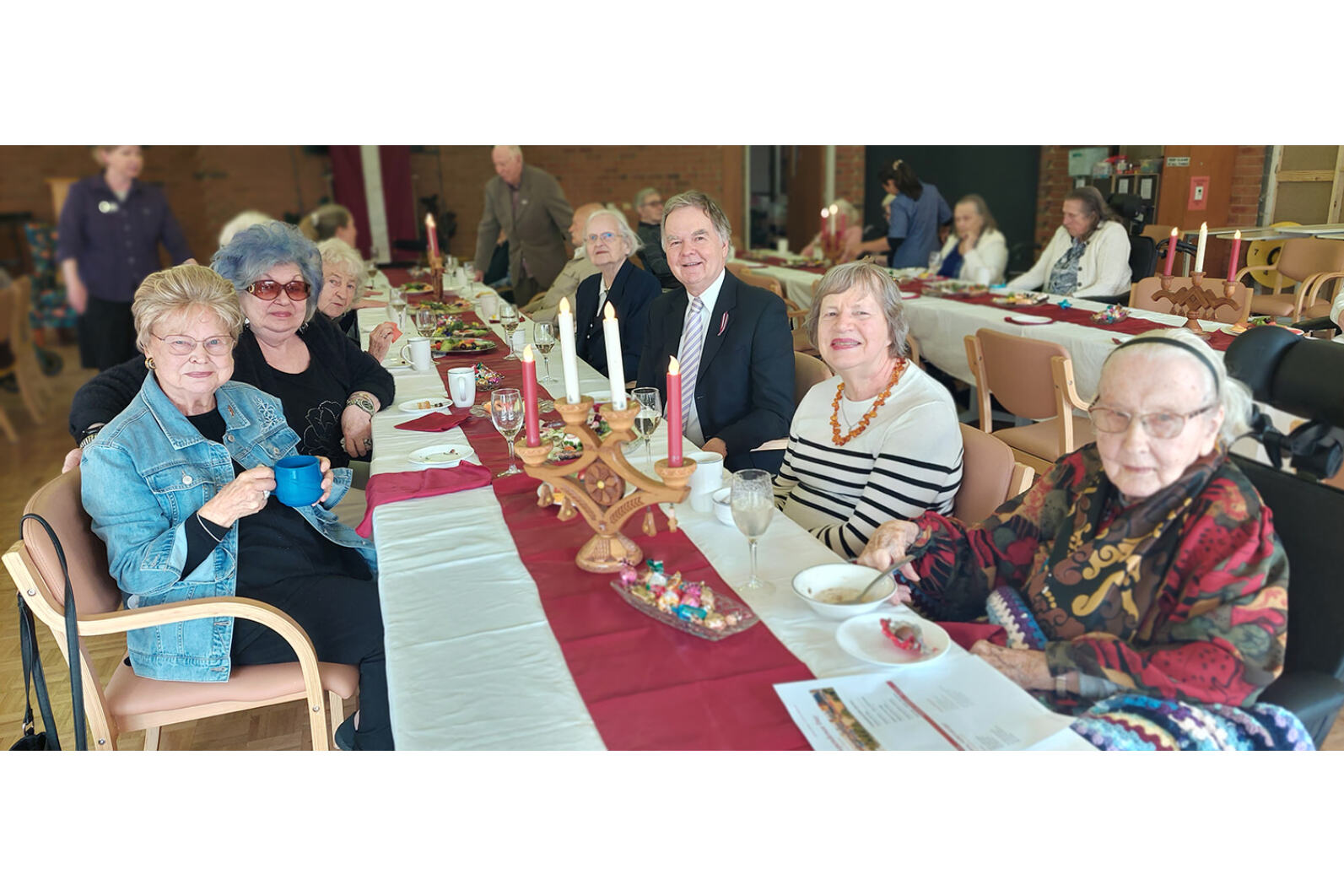
Following the ceremony, residents (many of whom are not Latvian) happily chatted over champagne and national delicacies like pīrāgi’s, traditional savoury buns filled with bacon and onions.
Resident Selga explained the significance of them at celebrations. “My family used to make all sorts of things with this pirag dough,” she said. This was a treat, as most of the time their food was “very simple”: lots of minced meats, soups and cabbage.
Daila, a Lifestyle coordinator at the site, wore her traditional folk costume as she tended to the residents.
“Every town has its own costume. This one is from Nica by the coast, so it’s donned with amber,” she said.
Atop her head was a Vainag, a traditional Latvian crown worn by unmarried girls and young women. Daila’s mum made it when she was 12, when she was in a displaced people’s camp. She asked around the neighborhood for everyone’s broken necklaces and beads. The intricate hand-stitching took a year to complete.
“Even though it’s wonky and they’re not all the same size, I wear it thinking of her and what she went through,” said Daila.
Resident Elvira was grateful to be celebrating the day with her community, who is small but mighty, and her language which has stronger similarities to Sanskrit than Russian.
“To me language is like a flower, each one has its beauty,” said Elvira. “So, the fact that we can do events like these to keep our language alive is fantastic.”
Cultural celebrations are an important part of life at our sites. They allow residents to feel recognised, included and to share their treasured cultural traditions with others. Our hardworking Lifestyle teams are always on the lookout to ensure everyone feels they belong and can practice their faith and cultural beliefs freely.
We welcome all at Uniting AgeWell and for our Latvian community we are “saviļņots ” (thrilled) to have been able to mark this significant day with life and colour.