News
Talking openly about dementia

Organisational
More than 446,500 Australians are living with dementia — and that number is expected to more than double by 2065.
Dementia Action Week (21-27 September) is a chance to talk openly about dementia, understand the early signs and learn what support is available.
This year’s theme, “It’s time to talk dementia”, reflects Uniting AgeWell’s focus on practical support, education and care that respects each person’s needs, choices and experiences.
“We want to help people understand how they can reduce their risks of dementia and to know the early signs of the disease, as well as what support is available,” Director of Dementia Karen Cameron says.
Support for people living with dementia
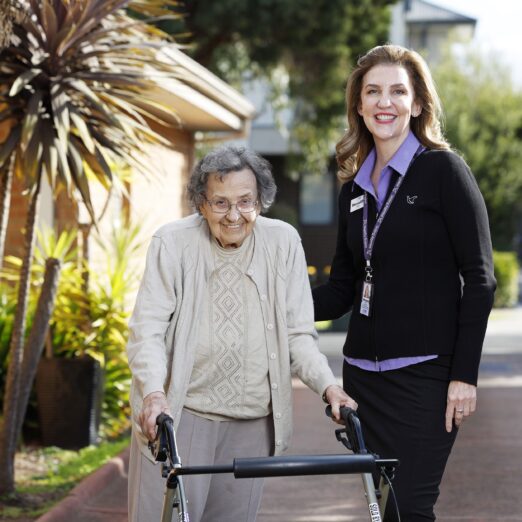
Uniting AgeWell supports people living with dementia at home, in the community and in residential aged care. This includes respite care, Social Connection programs at Community Hubs, and Support at Home services.
For people living at home, support may include respite, in-home care and advice on aids that can make daily life safer and easier, such as watch trackers and reminder clocks.
Educating our community
Throughout September and October, Uniting AgeWell is partnering with Dementia Australia to offer Better Visit sessions at seven residential aged care sites across Victoria and Tasmania. The sessions help residents, families and friends communicate more confidently and have more meaningful visits.
Uniting AgeWell will also attend Dementia Action Week events at Manningham Uniting Church on 15 September and Mount Waverley Uniting Church on 1 October, where team members will offer information and answer questions about dementia and home care.
Our approach to dementia care
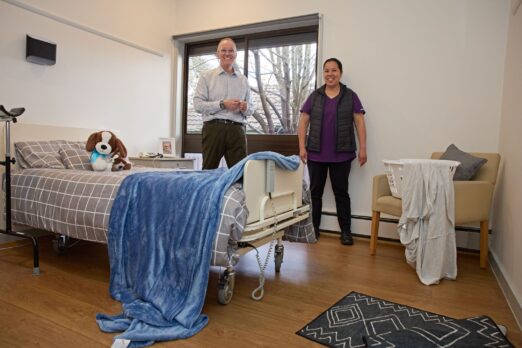
Uniting AgeWell’s Dementia Framework guides care that promotes dignity, comfort, connection and quality of life.
Led by Karen, the framework supports dementia-friendly environments, symptom relief, staff capability, partnerships, and continuous improvement.
It also supports respectful communication, early diagnosis and care planning with families and carers.
Training staff to provide quality care
Staff dementia education includes eLearning, tailored sessions, manual handling training and face-to-face virtual reality training through Dementia Australia.
The EDIE virtual reality workshops help staff experience some of the challenges a person living with dementia may face, such as confusion caused by patterns, contrast or depth perception.
Karen says the training has increased staff confidence and helped teams better understand and respond to people’s needs.
Knowing the signs
Early support can make a difference. If you or someone you care about is showing changes in memory, thinking, communication or behaviour, speaking with a trusted GP or community nurse may be a good first step.
Signs and symptoms can include:
- Memory loss or difficulty with familiar tasks
- Problems with language, word finding or following conversations
- Disorientation, losing track of dates or getting lost in familiar places
- Changes in judgement, mood, personality or social connection
Reducing risk factors
Dementia risk can be influenced by age, family history, lifestyle and health conditions. Some risks cannot be changed, but healthy habits can support brain health over time.
These include staying active, eating well, not smoking, limiting alcohol, keeping socially connected, looking after hearing and vision, and having regular health checks.
Dementia Action Week is a chance to learn more, ask questions and understand the support available to help people live safely, stay connected and receive the right care when needed.
As Karen says: “It’s an opportunity to increase awareness of dementia and show the human stories behind a condition that impacts so many of us.”